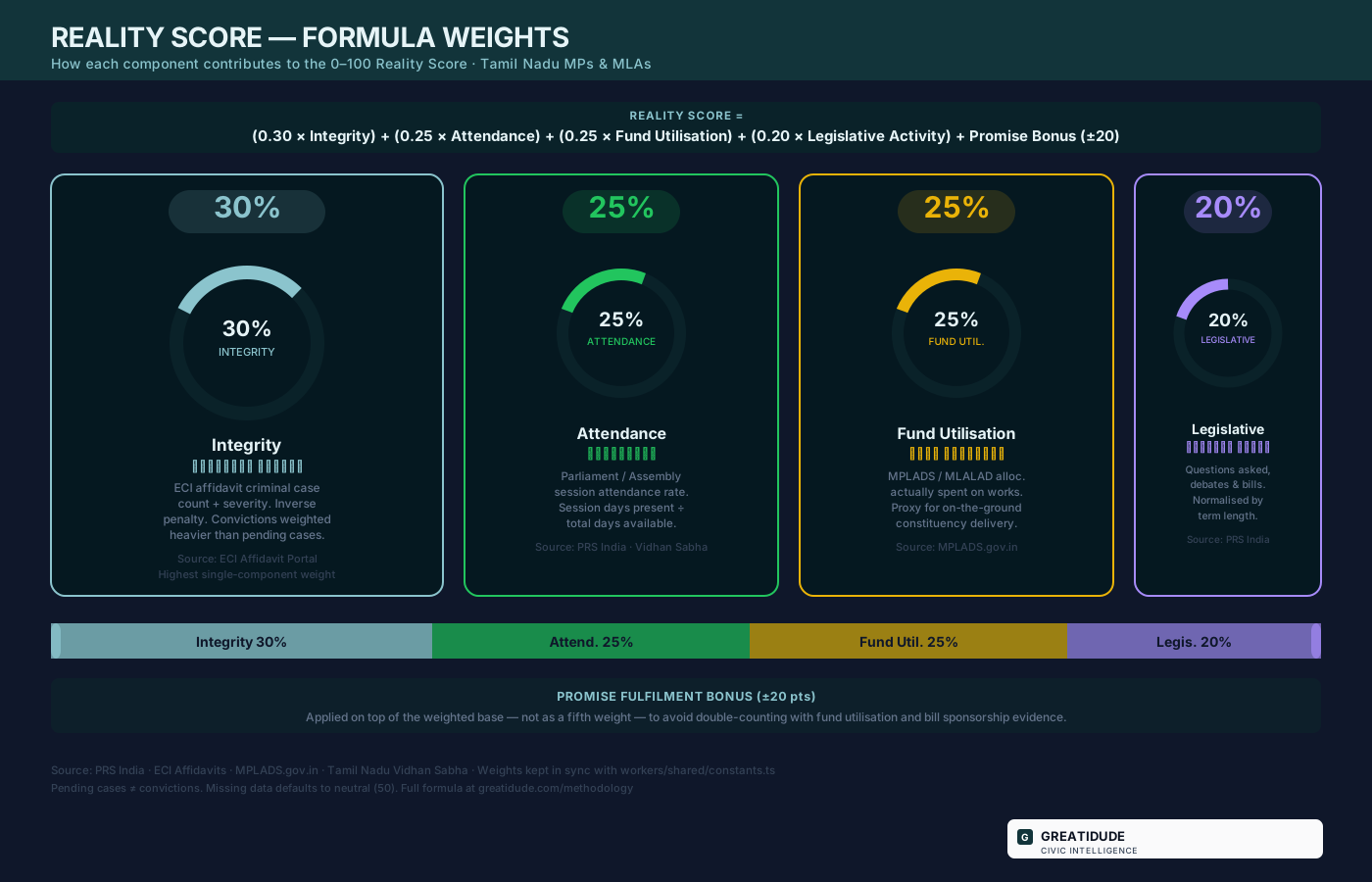
Formula weights overview. Full rationale for each component is in the weights table below.
We publish a Reality Score, a Perception Score,
and the Gap between them. This page explains how each is
computed, what data sources feed it, and where it can be wrong.
For per-release changes, see the formula changelog.
To explore how rankings shift with different weights, try the sensitivity tool.
1. Reality Score
A 0 – 100 number derived from public administrative records. Higher = the
politician has shown up, spent their allocated funds, legislated actively,
and has a clean record.
Weights (sum = 1.00):
25% —
சட்டமன்ற / நாடாளுமன்ற பங்கேற்பு / Legislative attendance
Public attendance records (PRS + official house registers). Shows up-or-out engagement with formal duty.
25% —
MPLADS / MLALAD நிதி பயன்பாடு / Constituency fund utilisation
Percentage of MPLADS / MLALAD allocation actually spent on sanctioned works. A proxy for on-the-ground delivery.
20% —
கேள்விகள் + மசோதாக்கள் / Questions + Bills
Normalised count of questions asked and private-members bills introduced, relative to term length.
Inverse penalty based on ECI-affidavit criminal case record. Pending cases are weighted lower than convictions.
Promise fulfilment is applied as a ±20-point bonus on top of this
weighted base — not as a fifth weighted term. This avoids double-counting
when a promise outcome is already reflected in fund utilisation or bill
sponsorship.
2. Perception Score
A 0 – 100 number derived from public sentiment signals — Tamil news
headlines, social posts we legally collect under fair-use quoting, and
search-trend intensity. Higher = the politician is talked about
favourably, not just talked about often.
Volume alone is not praise. Perception is sentiment-weighted, clipped
at the 95th percentile to reduce bot-farm spikes, and recomputed on a
rolling window so one-week viral moments don't dominate the annual score.
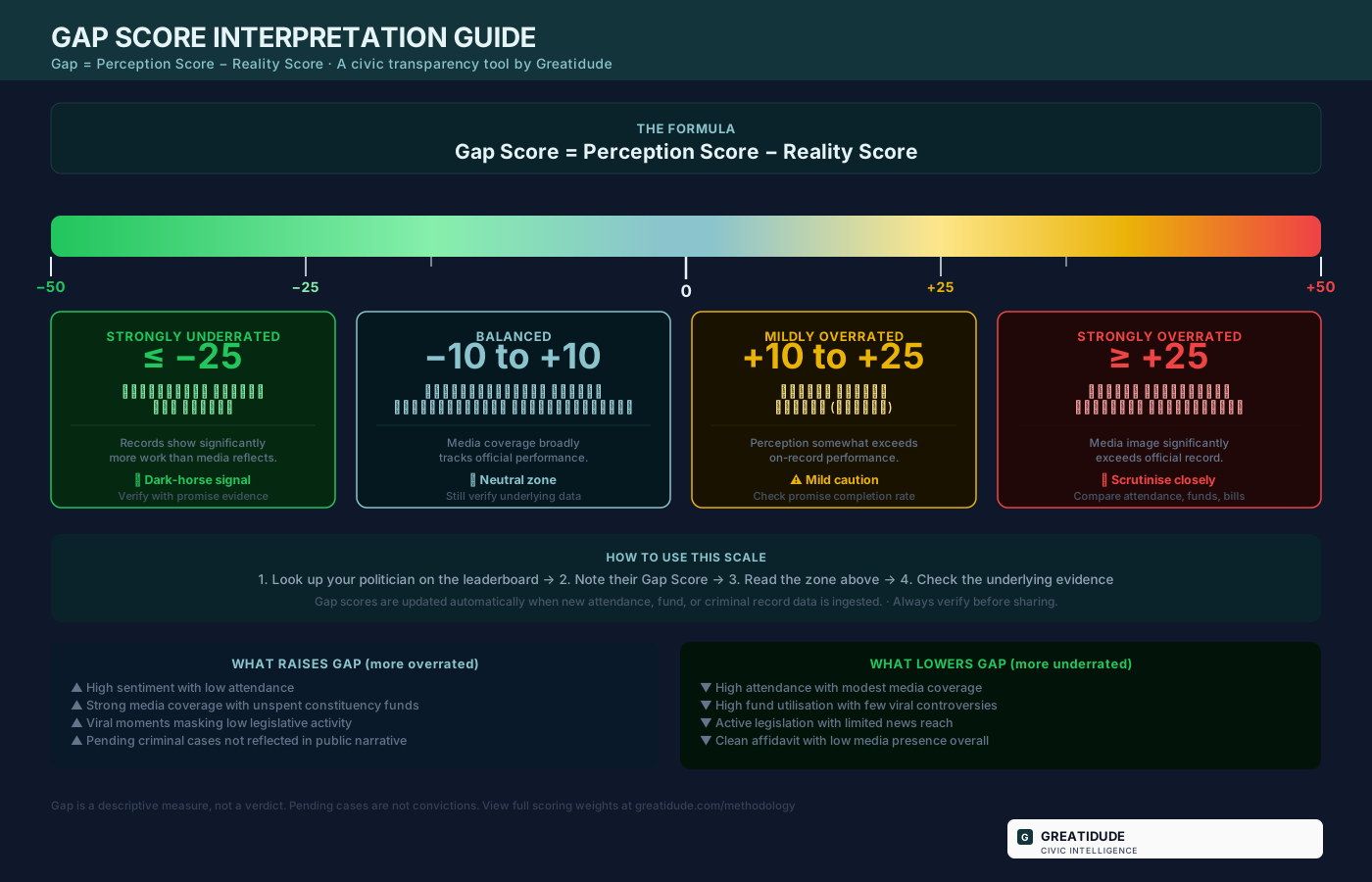
Gap Score zone reference. Negative = underrated (dark-horse), near-zero = balanced, positive = overrated. See live leaderboard.
3. The Gap
Gap = Perception − Reality.
Large positive gap → the public thinks better of the politician than the records suggest (overrated).
Large negative gap → the records show more work than the public credits them with (underrated / dark-horse).
Near zero → perception tracks record. No news is signal too.
The Gap is a descriptive finding, not a verdict. Our website shows it
alongside the evidence that produced it; an "overrated" label with no
underlying data would be an opinion, and we don't publish those as facts.
4. Known limitations
Attendance data from the Rajya Sabha is less structured than Lok Sabha; we flag politicians where the record is incomplete.
MPLADS / MLALAD utilisation data lags by up to one quarter. Scores incorporate the most recent published figures only.
Criminal case data is drawn from ECI affidavits. We do not interpret the cases — we report their presence. Pending cases are not convictions.
Sentiment signals skew toward politicians with high media coverage. First-term members and constituency-focused MLAs are under-represented in raw signal; the dark-horse calibration compensates but is not perfect.
We publish only labels we can evidence. A "kept" or "broken" promise that lacks a verifiable public citation is downgraded to Under review on public pages until evidence is attached — see the editorial policy.
5. Process and corrections
Every score carries a "data as of" timestamp drawn from the latest ingestion run.